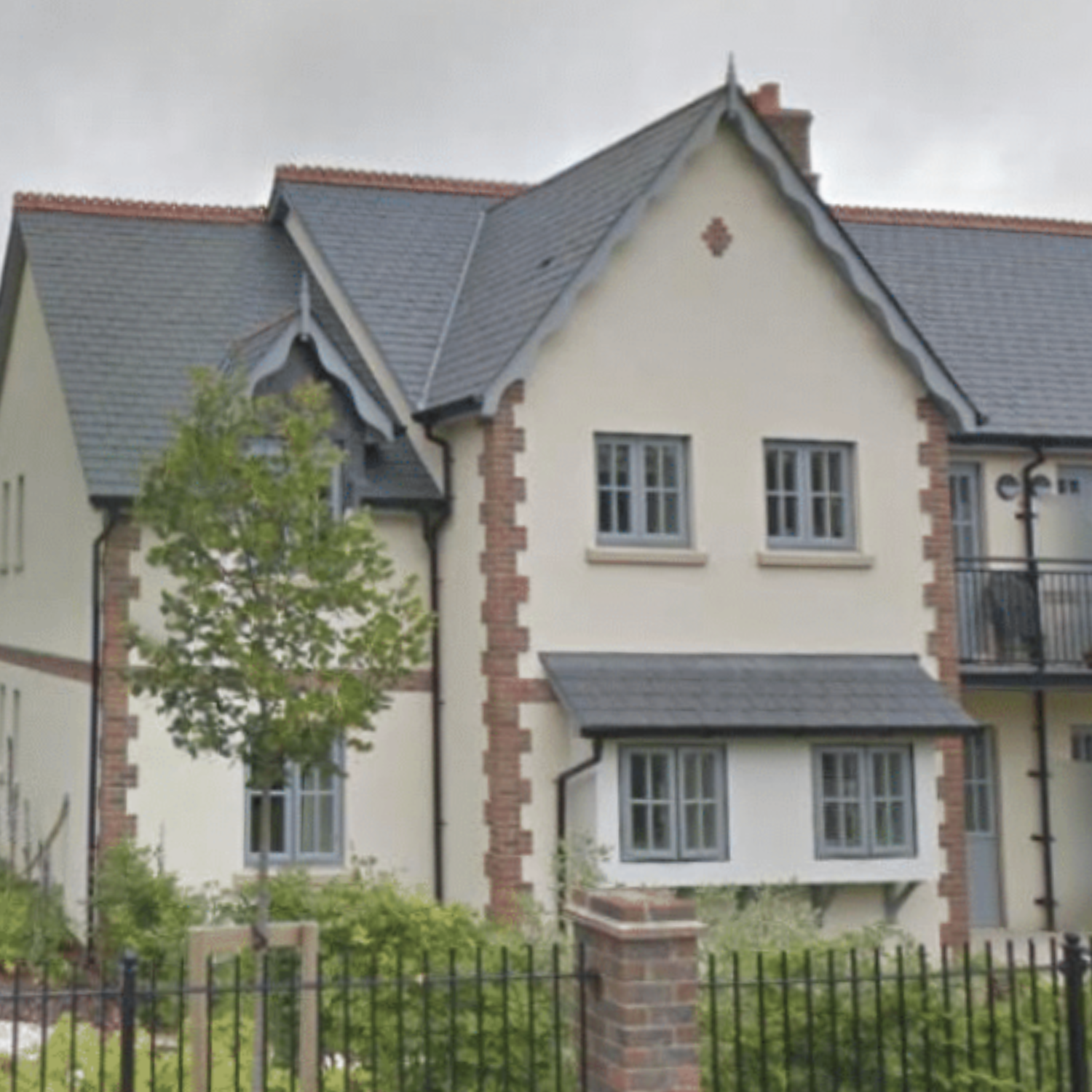
A later-living apartment complex requiring an engineered approach to fire safety.
Silver Sands is a new later-living apartment complex for McCarthy & Stone at Bembridge on the Isle of Wight. The development consists of multiple residential units across lower ground, ground and first floor levels, with covered car parking at lower ground floor level.
To comply with the requirements of Approved Document Part B, the building geometry and the client's design standards necessitated a performance-based engineered approach to the means of escape strategy. A protected corridor route to each apartment was required in the event of fire, delivered through an integrated solution combining fire alarm provision, corridor protection and mechanical smoke ventilation.
Fire strategy, smoke ventilation design and fire systems engineering.
Osborn Associates produced the fire and life safety strategy for the entire complex, followed by the detailed design of the mechanical smoke ventilation systems to BS EN 12101.
The occupant fire safety strategy for this building employed a defend-in-place methodology - keeping all residents within their apartments until rescued by the fire services, rather than relying on self-evacuation. This approach recognised the reality that elderly residents may not be able to evacuate independently, and shaped the smoke ventilation design to maintain tenable conditions in the corridors for fire service access.
The detailed design of the fire detection and alarm systems was carried out to BS 5839, fully coordinated with the smoke ventilation strategy to ensure both systems worked together as an integrated fire safety package.
Balancing cost efficiency with architectural sensitivity in a fire-engineered solution.
The primary challenge was delivering a fire strategy that was both cost-efficient and sympathetically integrated with the architectural scheme. Retirement living developments for McCarthy & Stone are designed to feel like quality homes, not institutional buildings, and the fire systems needed to respect that intent.
The engineered approach allowed the team to develop a solution that met the regulatory requirements without resorting to the more invasive and expensive measures that a purely prescriptive approach would have demanded. This delivered genuine value for the client while achieving a higher standard of occupant safety than a standard code-compliant design.